
Choosing Local Air Conditioning Fitters for a Cleaner Installation Process
A well-designed air conditioning system should do more than cool or heat a room effectively. The installation itself should be neat, practical and planned around the property. Poorly positioned equipment, untidy pipework or difficult access can affect both the appearance of a home and how easy the system is to maintain.

Why you can trust our content
We know the air conditioning industry can be confusing, but we only rely on trusted sources, including:



At a glance
Choosing the right installer is therefore an important part of the process. Experience, system knowledge, installation planning and aftercare can all influence the quality of the finished result.
For homeowners comparing air conditioning fitters Kilmarnock, it is worth looking beyond availability and headline price. A good installer should be able to explain the proposed system, identify installation challenges and leave you with equipment that is straightforward to operate and maintain.
If you are considering air conditioning for your home, Stewart Temperature Solutions can assess the property and help you understand what type of installation would be most suitable.
What makes a good air conditioning installer?
A reliable installer should combine technical knowledge with careful planning.
Before work begins, they should understand:
- Which rooms need heating or cooling
- The required system capacity
- Suitable indoor unit positions
- Outdoor unit placement
- Pipework routes
- Electrical requirements
- Condensate drainage
- Maintenance access
- Property access limitations
A professional approach starts with the property rather than a standard package.
Different homes have different layouts, construction and installation constraints. The equipment should therefore be selected around the building and the homeowner’s intended use.
Why does installation quality matter?
The quality of installation can affect how the system looks, operates and performs over time.
Even good equipment can create problems if it is poorly positioned or incorrectly installed. Pipework may be unnecessarily exposed, drainage may not be planned properly, or access to components may become difficult.
A careful installer considers these details before work starts.
The finished system should be functional without looking like an afterthought. Where possible, pipework and cables should be routed neatly, equipment should be securely mounted and future servicing should remain practical.
Should a local installer assess your home first?
For most domestic installations, an assessment can provide valuable information that cannot be obtained from a simple online form.
A site visit allows the installer to examine the rooms, walls, windows, outdoor space and potential connection routes.
The assessment may identify:
- Areas with high solar heat gain
- Suitable indoor mounting locations
- Outdoor unit positions
- Long or complicated pipe runs
- Electrical requirements
- Drainage challenges
- Access restrictions
- Potential maintenance issues
This information can then be used to develop a more realistic installation proposal.
How should indoor units be positioned?
Indoor unit placement should balance performance, appearance and practicality.
A wall-mounted unit should generally be positioned where air can circulate effectively without being blocked by furniture, curtains or other obstacles.
The installer should also consider how the unit will look within the room.
Good positioning can help avoid unnecessary pipework and make future maintenance easier. It can also reduce the temptation to place equipment in a visually convenient location that does not provide the best airflow.
What should happen to pipework and cables?
Pipework and cables connect the indoor and outdoor parts of a split or multi-split system. Their route should be planned before installation begins.
Where appropriate, these connections may be concealed or enclosed in suitable trunking. The best approach depends on the building, access and the homeowner’s preferences.
A clean installation should avoid unnecessary bends, exposed sections and awkward routes where practical.
It is worth discussing the proposed route with the installer before work starts, particularly if the equipment will be installed on a prominent wall.


What type of property do you have?

Semi-Detached

Detached

Terraced

Bungalow

Flat

Commercial or Small Office
It just takes 60 seconds
And then you can book a free consultation
Where should the outdoor unit be installed?
Outdoor unit placement affects airflow, access, appearance and maintenance.
The unit needs sufficient space around it to operate correctly and should remain accessible for servicing.
Potential positions vary according to the property. An installer may consider a suitable wall, ground-level location or another appropriate external position.
The installer should also consider the route back to the indoor equipment. A location that looks convenient from outside may create an unnecessarily complicated internal installation.
If you have concerns about where an outdoor unit could be positioned, contact Stewart Temperature Solutions. The team can assess the available space and discuss practical installation options.
How can an installer minimise disruption?
A well-planned installation should aim to minimise unnecessary disruption to the property.
Before starting, the installer should understand:
- Where equipment will be mounted
- Where pipework will run
- How electrical connections will be made
- How condensate will be drained
- What access is required
- Where tools and materials will need to be positioned
Planning these details in advance can help the work proceed efficiently.
After installation, the area should be left tidy and the homeowner should understand how to operate the system.
What should you ask an air conditioning company?
When comparing an air con installation company, ask practical questions rather than focusing solely on the advertised price.
Useful questions include:
- What system do you recommend and why?
- How will you determine the required capacity?
- Where will the indoor units be positioned?
- Where will the outdoor unit go?
- How will pipework be routed?
- How will condensate be drained?
- Is electrical work included?
- Can the system provide heating as well as cooling?
- What warranty is included?
- What aftercare is available?
The answers should give you a clearer idea of the quality and scope of the proposed installation.
Does the installer need experience with heating and cooling systems?
If you want a system that provides both heating and cooling, experience with the complete system is particularly useful.
Modern air conditioning can use air-to-air heat pump technology, meaning the same equipment can provide cooling during warmer periods and heating when required.
The system still needs to be correctly sized and installed for the intended use.
Discussing both functions during the initial assessment helps ensure that the equipment is selected appropriately from the beginning.
What about electrical and drainage work?
Air conditioning installation involves more than mounting the indoor unit.
The installer should consider the electrical supply, isolation requirements and cable routes. They should also plan how condensate produced during cooling will be drained.
These details are easy to overlook when comparing photographs of different systems, but they can have a major influence on the installation process.
A detailed quotation should explain what electrical and drainage work is included and identify anything that may require additional work.
How can you compare local installers fairly?
When researching ac installation services near me, it is sensible to compare companies using consistent criteria.
Consider:
| Area to compare | What to look for |
| Assessment | Is the property properly inspected? |
| System selection | Is the recommendation explained? |
| Installation | Is the work clearly specified? |
| Pipework | Is the proposed route discussed? |
| Electrical work | Are requirements identified? |
| Drainage | Is condensate management explained? |
| Warranty | Are terms clearly stated? |
| Aftercare | Is future support available? |
| Maintenance | Can the installer provide servicing? |
| Communication | Are questions answered clearly? |
This gives you a more meaningful comparison than simply looking at the lowest initial price.
Why does aftercare matter?
Air conditioning systems require ongoing care to remain reliable.
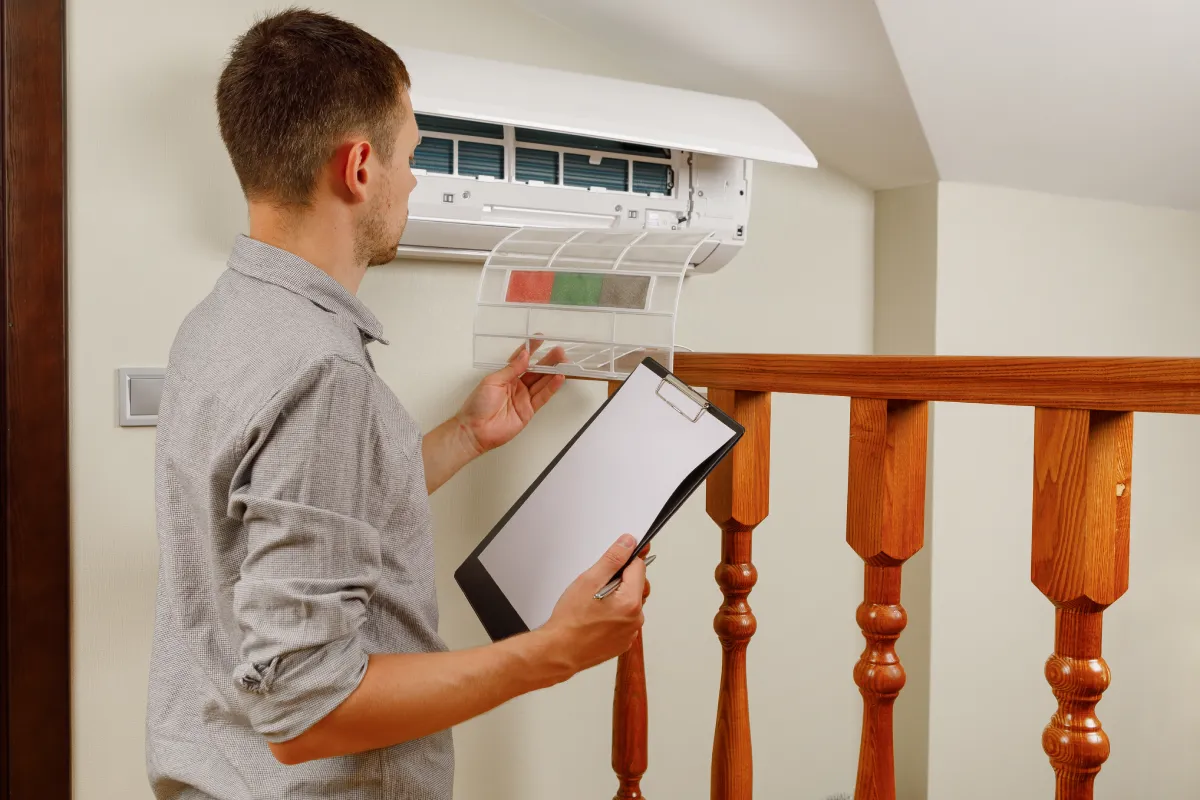
Filters may need regular cleaning, while professional servicing can help identify developing problems and keep components operating correctly.
Before choosing an installer, ask whether they provide maintenance and repair services after the installation.
A company that can support the system throughout its working life may offer greater practical value than one that only completes the initial installation.
A typical installation scenario
Imagine a homeowner wants air conditioning for an upstairs bedroom and an open-plan living area.
During the assessment, the installer finds that the bedroom has strong afternoon sunlight and limited wall space. The living area has more available space but requires a longer connection route to a suitable outdoor position.
Rather than using the same installation approach for both rooms, the installer can account for each room’s requirements when planning the system.
The final installation may include carefully positioned indoor units, a practical outdoor location and neatly managed connection routes.
This type of planning can make the finished system look more integrated with the property.
What are the warning signs of a poor installation proposal?
There are several reasons to ask more questions before accepting a quotation.
Be cautious if:
- No property assessment is offered where one is clearly needed.
- The installer cannot explain system sizing.
- Equipment specifications are vague.
- Pipework routes are not discussed.
- Outdoor unit placement is unclear.
- Electrical requirements are ignored.
- Drainage is not considered.
- Warranty details are missing.
- Aftercare arrangements are unclear.
- The quote contains a single unexplained total.
These points do not automatically mean an installer is unsuitable, but they are reasons to seek clarification.
What should you expect after installation?
A professional handover should leave you with a clear understanding of the system.
You should know:
- How to operate the controls
- How to adjust temperature settings
- How to use heating and cooling modes
- What routine cleaning is required
- When professional servicing may be appropriate
- Who to contact if a fault develops
- What warranty information applies
The installer should also explain any important operating considerations specific to the equipment.
Stewart Temperature Solutions can help with installation planning, system selection and ongoing support. If you are considering ac installation services for your property, contact the team to discuss your requirements.
Final Thoughts
Choosing an air conditioning installer is about more than finding someone who can fit the equipment. A cleaner installation begins with proper assessment, suitable system selection and careful planning of equipment positions, pipework, electrical connections and drainage.
For homeowners comparing AC installation services, look for an installer who can explain the complete process and provide support after the system is commissioned.
Stewart Temperature Solutions can provide practical guidance based on your property and intended use. Contact the team to discuss your air conditioning requirements and arrange a suitable assessment.
Related articles



What type of property do you have?
Semi-Detached
Detached
Terrace
Bungalow
Flat
Commercial or Small Office
At a glance
Choosing the right installer is therefore an important part of the process. Experience, system knowledge, installation planning and aftercare can all influence the quality of the finished result.
For homeowners comparing air conditioning fitters Kilmarnock, it is worth looking beyond availability and headline price. A good installer should be able to explain the proposed system, identify installation challenges and leave you with equipment that is straightforward to operate and maintain.
If you are considering air conditioning for your home, Stewart Temperature Solutions can assess the property and help you understand what type of installation would be most suitable.
What makes a good air conditioning installer?
A reliable installer should combine technical knowledge with careful planning.
Before work begins, they should understand:
- Which rooms need heating or cooling
- The required system capacity
- Suitable indoor unit positions
- Outdoor unit placement
- Pipework routes
- Electrical requirements
- Condensate drainage
- Maintenance access
- Property access limitations
A professional approach starts with the property rather than a standard package.
Different homes have different layouts, construction and installation constraints. The equipment should therefore be selected around the building and the homeowner’s intended use.
Why does installation quality matter?
The quality of installation can affect how the system looks, operates and performs over time.
Even good equipment can create problems if it is poorly positioned or incorrectly installed. Pipework may be unnecessarily exposed, drainage may not be planned properly, or access to components may become difficult.
A careful installer considers these details before work starts.
The finished system should be functional without looking like an afterthought. Where possible, pipework and cables should be routed neatly, equipment should be securely mounted and future servicing should remain practical.
Should a local installer assess your home first?
For most domestic installations, an assessment can provide valuable information that cannot be obtained from a simple online form.
A site visit allows the installer to examine the rooms, walls, windows, outdoor space and potential connection routes.
The assessment may identify:
- Areas with high solar heat gain
- Suitable indoor mounting locations
- Outdoor unit positions
- Long or complicated pipe runs
- Electrical requirements
- Drainage challenges
- Access restrictions
- Potential maintenance issues
This information can then be used to develop a more realistic installation proposal.
How should indoor units be positioned?
Indoor unit placement should balance performance, appearance and practicality.
A wall-mounted unit should generally be positioned where air can circulate effectively without being blocked by furniture, curtains or other obstacles.
The installer should also consider how the unit will look within the room.
Good positioning can help avoid unnecessary pipework and make future maintenance easier. It can also reduce the temptation to place equipment in a visually convenient location that does not provide the best airflow.
What should happen to pipework and cables?
Pipework and cables connect the indoor and outdoor parts of a split or multi-split system. Their route should be planned before installation begins.
Where appropriate, these connections may be concealed or enclosed in suitable trunking. The best approach depends on the building, access and the homeowner’s preferences.
A clean installation should avoid unnecessary bends, exposed sections and awkward routes where practical.
It is worth discussing the proposed route with the installer before work starts, particularly if the equipment will be installed on a prominent wall.
What type of property do you have?
Semi-Detached
Detached
Terraced
Bungalow
Flat
Commercial or Small Office
It just takes 60 seconds
And then you can book a free consultation
Where should the outdoor unit be installed?
Outdoor unit placement affects airflow, access, appearance and maintenance.
The unit needs sufficient space around it to operate correctly and should remain accessible for servicing.
Potential positions vary according to the property. An installer may consider a suitable wall, ground-level location or another appropriate external position.
The installer should also consider the route back to the indoor equipment. A location that looks convenient from outside may create an unnecessarily complicated internal installation.
If you have concerns about where an outdoor unit could be positioned, contact Stewart Temperature Solutions. The team can assess the available space and discuss practical installation options.
How can an installer minimise disruption?
A well-planned installation should aim to minimise unnecessary disruption to the property.
Before starting, the installer should understand:
- Where equipment will be mounted
- Where pipework will run
- How electrical connections will be made
- How condensate will be drained
- What access is required
- Where tools and materials will need to be positioned
Planning these details in advance can help the work proceed efficiently.
After installation, the area should be left tidy and the homeowner should understand how to operate the system.
What should you ask an air conditioning company?
When comparing an air con installation company, ask practical questions rather than focusing solely on the advertised price.
Useful questions include:
- What system do you recommend and why?
- How will you determine the required capacity?
- Where will the indoor units be positioned?
- Where will the outdoor unit go?
- How will pipework be routed?
- How will condensate be drained?
- Is electrical work included?
- Can the system provide heating as well as cooling?
- What warranty is included?
- What aftercare is available?
The answers should give you a clearer idea of the quality and scope of the proposed installation.
Does the installer need experience with heating and cooling systems?
If you want a system that provides both heating and cooling, experience with the complete system is particularly useful.
Modern air conditioning can use air-to-air heat pump technology, meaning the same equipment can provide cooling during warmer periods and heating when required.
The system still needs to be correctly sized and installed for the intended use.
Discussing both functions during the initial assessment helps ensure that the equipment is selected appropriately from the beginning.
What about electrical and drainage work?
Air conditioning installation involves more than mounting the indoor unit.
The installer should consider the electrical supply, isolation requirements and cable routes. They should also plan how condensate produced during cooling will be drained.
These details are easy to overlook when comparing photographs of different systems, but they can have a major influence on the installation process.
A detailed quotation should explain what electrical and drainage work is included and identify anything that may require additional work.
How can you compare local installers fairly?
When researching ac installation services near me, it is sensible to compare companies using consistent criteria.
Consider:
| Area to compare | What to look for |
| Assessment | Is the property properly inspected? |
| System selection | Is the recommendation explained? |
| Installation | Is the work clearly specified? |
| Pipework | Is the proposed route discussed? |
| Electrical work | Are requirements identified? |
| Drainage | Is condensate management explained? |
| Warranty | Are terms clearly stated? |
| Aftercare | Is future support available? |
| Maintenance | Can the installer provide servicing? |
| Communication | Are questions answered clearly? |
This gives you a more meaningful comparison than simply looking at the lowest initial price.
Why does aftercare matter?
Air conditioning systems require ongoing care to remain reliable.
Filters may need regular cleaning, while professional servicing can help identify developing problems and keep components operating correctly.
Before choosing an installer, ask whether they provide maintenance and repair services after the installation.
A company that can support the system throughout its working life may offer greater practical value than one that only completes the initial installation.
A typical installation scenario
Imagine a homeowner wants air conditioning for an upstairs bedroom and an open-plan living area.
During the assessment, the installer finds that the bedroom has strong afternoon sunlight and limited wall space. The living area has more available space but requires a longer connection route to a suitable outdoor position.
Rather than using the same installation approach for both rooms, the installer can account for each room’s requirements when planning the system.
The final installation may include carefully positioned indoor units, a practical outdoor location and neatly managed connection routes.
This type of planning can make the finished system look more integrated with the property.
What are the warning signs of a poor installation proposal?
There are several reasons to ask more questions before accepting a quotation.
Be cautious if:
- No property assessment is offered where one is clearly needed.
- The installer cannot explain system sizing.
- Equipment specifications are vague.
- Pipework routes are not discussed.
- Outdoor unit placement is unclear.
- Electrical requirements are ignored.
- Drainage is not considered.
- Warranty details are missing.
- Aftercare arrangements are unclear.
- The quote contains a single unexplained total.
These points do not automatically mean an installer is unsuitable, but they are reasons to seek clarification.
What should you expect after installation?
A professional handover should leave you with a clear understanding of the system.
You should know:
- How to operate the controls
- How to adjust temperature settings
- How to use heating and cooling modes
- What routine cleaning is required
- When professional servicing may be appropriate
- Who to contact if a fault develops
- What warranty information applies
The installer should also explain any important operating considerations specific to the equipment.
Stewart Temperature Solutions can help with installation planning, system selection and ongoing support. If you are considering ac installation services for your property, contact the team to discuss your requirements.
Final Thoughts
Choosing an air conditioning installer is about more than finding someone who can fit the equipment. A cleaner installation begins with proper assessment, suitable system selection and careful planning of equipment positions, pipework, electrical connections and drainage.
For homeowners comparing AC installation services, look for an installer who can explain the complete process and provide support after the system is commissioned.
Stewart Temperature Solutions can provide practical guidance based on your property and intended use. Contact the team to discuss your air conditioning requirements and arrange a suitable assessment.
Related articles
What type of property do you have?
Semi-Detached
Detached
Terrace
Bungalow
Flat
Commercial or Small Office
