
Cost of Solar and Battery Repair Ayrshire: What Impacts the Price?
Solar and battery systems can operate reliably for many years, but when something goes wrong, one of the first questions homeowners ask is how much it will cost to put right.

Why you can trust our content
We know the renewable energy industry can be confusing, but we only rely on trusted sources, including:




At a glance
There is no single price that applies to every installation. A straightforward wiring issue can require very different work from a failed inverter or a battery problem involving several components. The age, design and condition of the installation can also affect what is practical.
Understanding the main factors behind the price can make it easier to compare repair options and decide whether repairing the existing system remains sensible.
What determines solar and battery repair costs?
The cost of a repair is usually influenced by the type of fault, how difficult it is to diagnose, whether replacement parts are needed and the overall condition of the system.
For homeowners researching the cost of solar and battery repair ayrshire, these are some of the most important factors to consider:
| Cost factor | Why it matters |
| Fault diagnosis | More complex faults can take longer to identify |
| Labour | Time required depends on the nature of the repair |
| Replacement parts | Components vary significantly in price |
| System age | Older equipment may be harder to support |
| Access | Difficult-to-reach equipment can increase labour time |
| System complexity | More components can mean more testing |
| Compatibility | Replacement parts must work with the existing installation |
| Additional faults | One issue can sometimes reveal another problem |
The final price should therefore follow a proper assessment rather than being based on the symptom alone.
If your solar or battery system is behaving differently from normal, contact Stewart Temperature Solutions for advice on what may need investigating before committing to any repair work.
Does the type of fault change the repair price?
Yes. Different faults require different levels of investigation and work.
A simple issue with a visible connection may be relatively straightforward to resolve. In contrast, an inverter fault may require diagnostic testing to establish whether the problem is with the inverter itself, its connections or another part of the system.
Battery-related issues can also vary considerably. Reduced performance does not necessarily mean that the battery has completely failed. The problem could relate to settings, communication, associated equipment or the battery’s own condition.
Common areas that may need investigation include:
- Solar inverter faults
- Battery charging problems
- Battery discharge issues
- Fault codes
- Monitoring failures
- Damaged cabling or connections
- Communication issues between system components
- Reduced solar generation
This is why two homeowners experiencing what appears to be the same problem could receive very different repair recommendations.
How much does fault diagnosis contribute to the price?
Diagnosis is an important part of any technical repair because the visible symptom is not always the underlying cause.
For example, a homeowner may notice that less electricity is being generated than expected. That does not immediately identify whether the problem involves the solar array, inverter, wiring, monitoring system or another part of the installation.
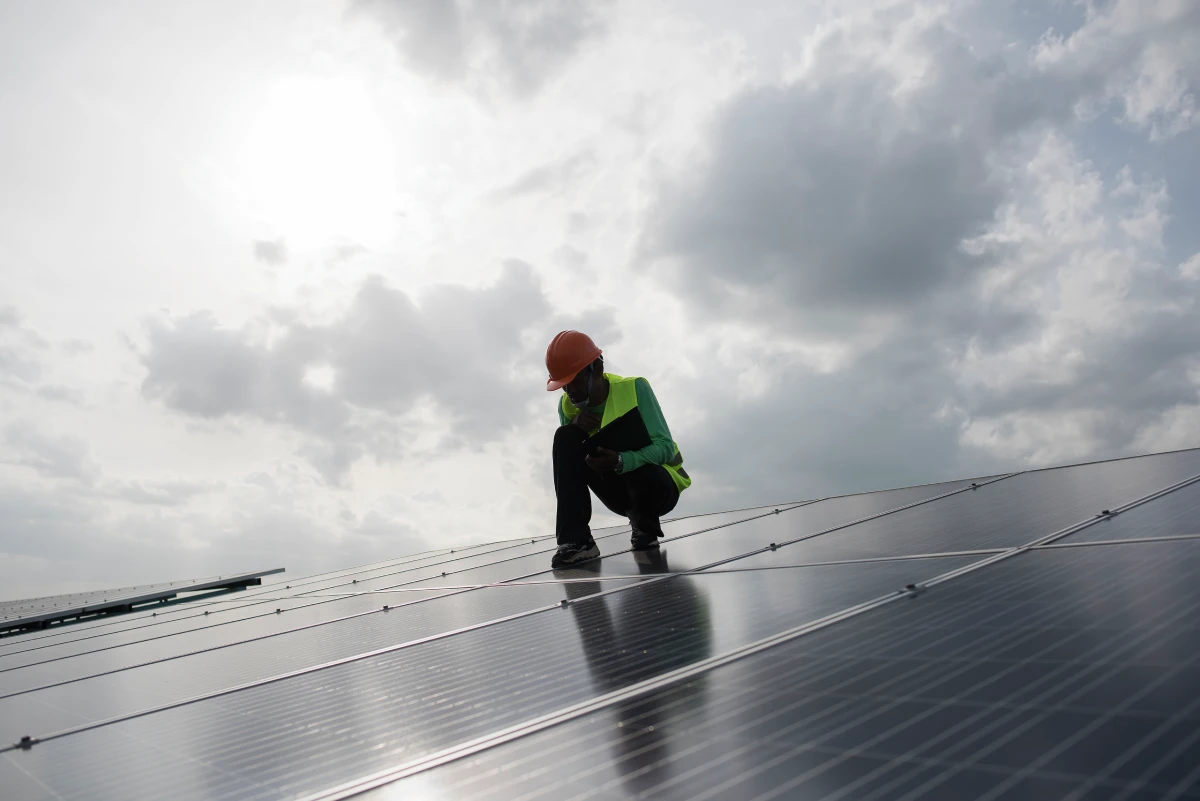
A qualified engineer may need to inspect equipment, check connections, review system readings and test individual components before recommending a repair.
A diagnosis can therefore add to the initial cost, but it can also prevent unnecessary replacement of equipment that is still functioning correctly.
For an accurate cost of solar and battery repair Ayrshire estimate, the fault generally needs to be understood before the work can be priced properly.
Does the age of the system affect repair costs?
It can.
Older solar and battery systems may contain components that are no longer widely supported or that are more difficult to source. In some cases, a compatible replacement may be available, while in others the installer may need to consider alternative equipment.
Age also matters because repairing one older component may not provide a long-term solution if other major parts are approaching the end of their useful service life.
For example, spending money repairing an ageing inverter may make sense if the rest of the system is in excellent condition. However, if the battery and controls are also becoming unreliable, a wider upgrade could be worth considering.
This does not mean an older system should automatically be replaced. It simply means repair costs should be considered alongside likely future reliability.
Could the repair reveal other problems?
Yes. Sometimes the first fault found is only part of the picture.
A technical inspection may identify an additional issue that was not obvious from the original symptoms. For instance, an inverter fault could be accompanied by a damaged connection, or a battery problem could be linked to another part of the system.
This is one reason homeowners should ask what has actually been tested and whether the recommended repair addresses the root cause.
A clear explanation should distinguish between:
The original fault: What caused the system to stop working correctly?
Additional findings: Has anything else been identified during testing?
Essential work: What needs to be addressed to restore safe operation?
Optional improvements: Is there anything that could improve the system but is not necessary to resolve the current fault?
Keeping these categories separate makes pricing easier to understand.
When reviewing a repair recommendation, speak to our team if you would like the proposed work explained clearly, including what is essential now and what could be considered later.
Does access to the equipment affect the price?
It can, particularly where equipment is installed in restricted or awkward locations.
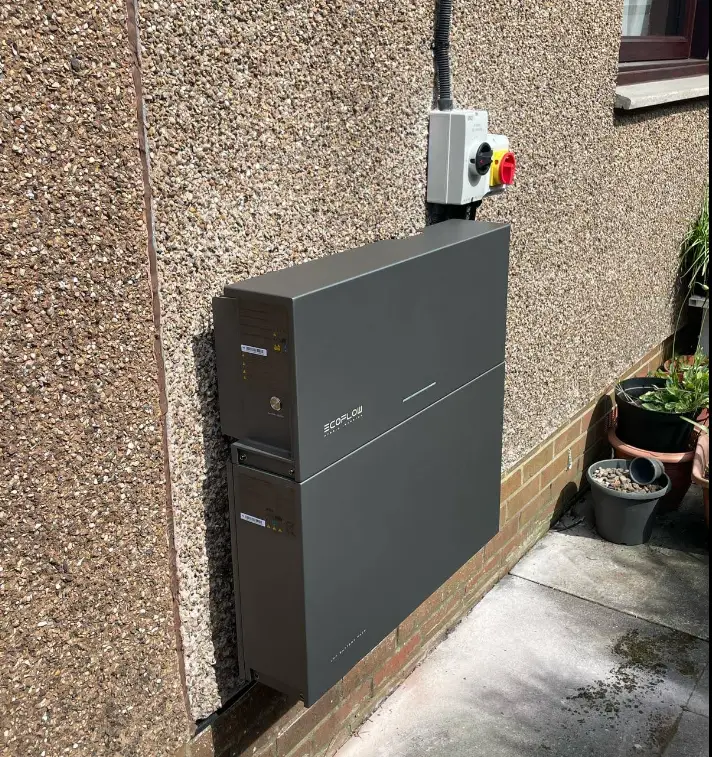
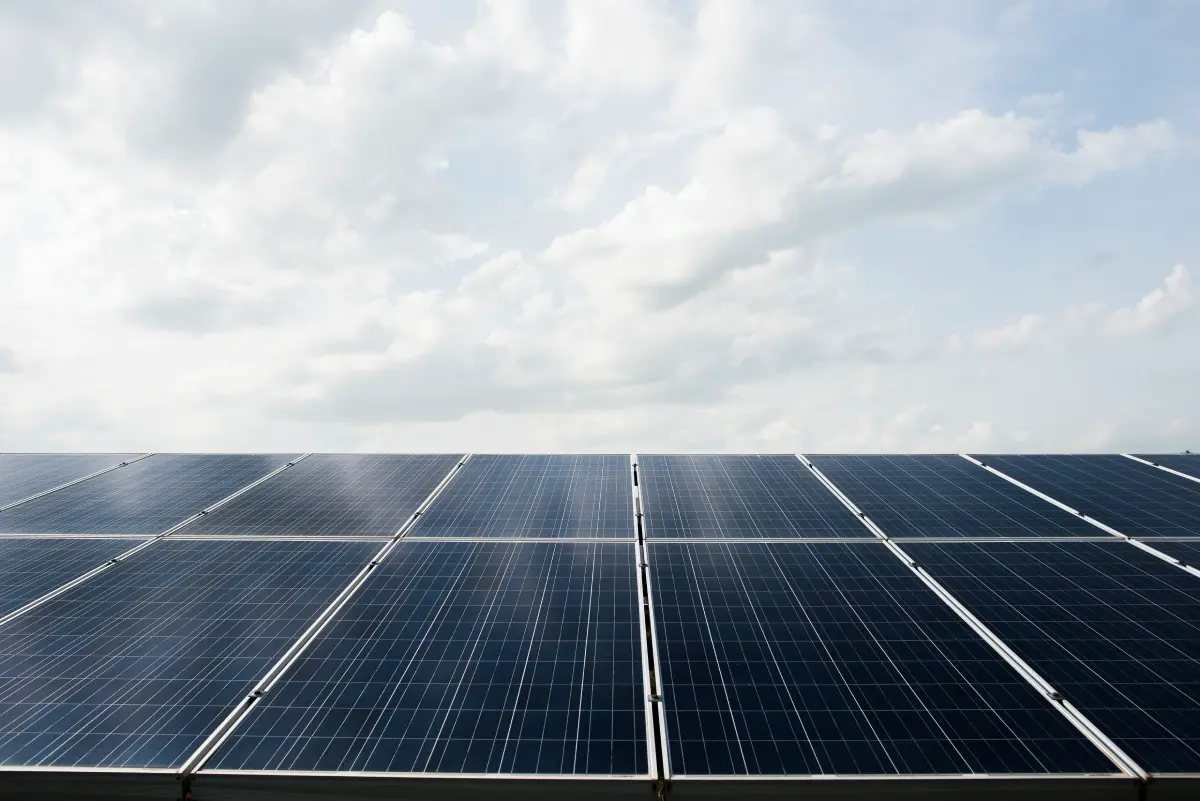
Solar panels are generally positioned on the roof, while inverters and batteries may be installed in garages, utility areas, cupboards or other parts of the property. Safe access is essential when inspecting or replacing equipment.
If an engineer needs additional time or equipment to reach a component safely, this can affect labour requirements.
The same applies when a system has been installed in a particularly compact space or where several components need to be isolated and tested individually.
Good planning can help minimise unnecessary disruption and ensure the repair is completed safely.

What type of property do you have?

Detached House

Semi Detached House

Terraced House

Flat or Apartment
Bungalow
It just takes 2 minutes
And then you can book a free consultation
Is repairing always cheaper than upgrading?
Not necessarily.
A repair may be the most economical option when the fault is isolated and the rest of the system remains in good condition. However, repeated repairs can become less attractive when several ageing components are starting to cause problems.
Consider the following example.
A homeowner has an older solar installation with an inverter fault. The solar panels are still performing well and the battery remains in good condition. Repairing or replacing the inverter may be a sensible approach.
Now consider a system where the inverter is ageing, battery capacity has declined and monitoring equipment is unreliable. Repairing each issue separately could involve several rounds of expenditure. In that situation, comparing the total repair costs with an upgrade may provide a clearer long-term picture.
The cheapest immediate option is not always the lowest-cost option over several years.
What should be included in a repair quotation?
A useful quotation should make the proposed work easy to understand.
Ideally, it should clarify:
- The identified fault
- The work required
- Replacement components, where applicable
- Labour involved
- Any testing included
- Whether additional work is recommended
- Whether the price is fixed or subject to further investigation
- Any relevant warranty information
This makes it easier to compare quotations from different installers.
It is also worth checking whether the quoted work is designed to resolve the immediate problem only or whether it includes improvements intended to increase future reliability.
Can repair costs be reduced by replacing only one component?
Sometimes.
A solar and battery system consists of multiple parts that work together, so a fault with one component does not necessarily mean everything needs replacing.
If an inverter has failed but the panels, battery and supporting equipment are still suitable, replacing the inverter alone may be enough.
Similarly, if a specific connection or component is causing the problem, targeted repair work can avoid unnecessary expenditure.
However, compatibility must be checked carefully. A new component needs to operate correctly with the rest of the installation and should be appropriate for its existing design.
This is why component-by-component assessment is more useful than assuming the most expensive option is the safest.
How can homeowners judge whether a repair quote offers good value?
Price is only one part of the decision.
A sensible comparison should consider:
- What caused the fault
- What equipment is being repaired or replaced
- How old the existing system is
- Whether the repair is likely to provide reliable future operation
- Whether the equipment remains compatible
- Whether similar faults have occurred previously
- Whether an upgrade could be more appropriate
A very low quote is not necessarily better if it does not address the underlying problem. Equally, a higher quote is not automatically better simply because it involves more equipment.
The value comes from resolving the problem appropriately and leaving the homeowner with a system that remains suitable for the property’s needs.
Making sense of repair costs
Solar and battery repair costs can vary widely because every installation is different. The fault itself, equipment age, replacement parts, accessibility and wider system condition can all influence the final figure.
Rather than choosing a repair based on price alone, homeowners should look for a clear explanation of the fault and the work needed to resolve it. This helps ensure that money is being spent on the actual problem rather than unnecessary replacement.
For homeowners across Ayrshire, Stewart Temperature Solutions can assess the existing system and provide practical guidance on whether repair work is appropriate or whether an upgrade deserves consideration.
For tailored advice and a clearer understanding of your repair options, contact Stewart Temperature Solutions and discuss your solar and battery system with the team.
Related articles


To add to my existing solar system
As a standalone for off-peak charging
At a glance
There is no single price that applies to every installation. A straightforward wiring issue can require very different work from a failed inverter or a battery problem involving several components. The age, design and condition of the installation can also affect what is practical.
Understanding the main factors behind the price can make it easier to compare repair options and decide whether repairing the existing system remains sensible.
What determines solar and battery repair costs?
The cost of a repair is usually influenced by the type of fault, how difficult it is to diagnose, whether replacement parts are needed and the overall condition of the system.
For homeowners researching the cost of solar and battery repair ayrshire, these are some of the most important factors to consider:
| Cost factor | Why it matters |
| Fault diagnosis | More complex faults can take longer to identify |
| Labour | Time required depends on the nature of the repair |
| Replacement parts | Components vary significantly in price |
| System age | Older equipment may be harder to support |
| Access | Difficult-to-reach equipment can increase labour time |
| System complexity | More components can mean more testing |
| Compatibility | Replacement parts must work with the existing installation |
| Additional faults | One issue can sometimes reveal another problem |
The final price should therefore follow a proper assessment rather than being based on the symptom alone.
If your solar or battery system is behaving differently from normal, contact Stewart Temperature Solutions for advice on what may need investigating before committing to any repair work.
Does the type of fault change the repair price?
Yes. Different faults require different levels of investigation and work.
A simple issue with a visible connection may be relatively straightforward to resolve. In contrast, an inverter fault may require diagnostic testing to establish whether the problem is with the inverter itself, its connections or another part of the system.
Battery-related issues can also vary considerably. Reduced performance does not necessarily mean that the battery has completely failed. The problem could relate to settings, communication, associated equipment or the battery’s own condition.
Common areas that may need investigation include:
- Solar inverter faults
- Battery charging problems
- Battery discharge issues
- Fault codes
- Monitoring failures
- Damaged cabling or connections
- Communication issues between system components
- Reduced solar generation
This is why two homeowners experiencing what appears to be the same problem could receive very different repair recommendations.
How much does fault diagnosis contribute to the price?
Diagnosis is an important part of any technical repair because the visible symptom is not always the underlying cause.
For example, a homeowner may notice that less electricity is being generated than expected. That does not immediately identify whether the problem involves the solar array, inverter, wiring, monitoring system or another part of the installation.
A qualified engineer may need to inspect equipment, check connections, review system readings and test individual components before recommending a repair.
A diagnosis can therefore add to the initial cost, but it can also prevent unnecessary replacement of equipment that is still functioning correctly.
For an accurate cost of solar and battery repair Ayrshire estimate, the fault generally needs to be understood before the work can be priced properly.
Does the age of the system affect repair costs?
It can.
Older solar and battery systems may contain components that are no longer widely supported or that are more difficult to source. In some cases, a compatible replacement may be available, while in others the installer may need to consider alternative equipment.
Age also matters because repairing one older component may not provide a long-term solution if other major parts are approaching the end of their useful service life.
For example, spending money repairing an ageing inverter may make sense if the rest of the system is in excellent condition. However, if the battery and controls are also becoming unreliable, a wider upgrade could be worth considering.
This does not mean an older system should automatically be replaced. It simply means repair costs should be considered alongside likely future reliability.
Could the repair reveal other problems?
Yes. Sometimes the first fault found is only part of the picture.
A technical inspection may identify an additional issue that was not obvious from the original symptoms. For instance, an inverter fault could be accompanied by a damaged connection, or a battery problem could be linked to another part of the system.
This is one reason homeowners should ask what has actually been tested and whether the recommended repair addresses the root cause.
A clear explanation should distinguish between:
The original fault: What caused the system to stop working correctly?
Additional findings: Has anything else been identified during testing?
Essential work: What needs to be addressed to restore safe operation?
Optional improvements: Is there anything that could improve the system but is not necessary to resolve the current fault?
Keeping these categories separate makes pricing easier to understand.
When reviewing a repair recommendation, speak to our team if you would like the proposed work explained clearly, including what is essential now and what could be considered later.
Does access to the equipment affect the price?
It can, particularly where equipment is installed in restricted or awkward locations.
Solar panels are generally positioned on the roof, while inverters and batteries may be installed in garages, utility areas, cupboards or other parts of the property. Safe access is essential when inspecting or replacing equipment.
If an engineer needs additional time or equipment to reach a component safely, this can affect labour requirements.
The same applies when a system has been installed in a particularly compact space or where several components need to be isolated and tested individually.
Good planning can help minimise unnecessary disruption and ensure the repair is completed safely.
What type of property do you have?
Detached House
Semi Detached House
Terraced House
Flat or Apartment
Bungalow
It just takes 2 minutes
And then you can book a free consultation
Is repairing always cheaper than upgrading?
Not necessarily.
A repair may be the most economical option when the fault is isolated and the rest of the system remains in good condition. However, repeated repairs can become less attractive when several ageing components are starting to cause problems.
Consider the following example.
A homeowner has an older solar installation with an inverter fault. The solar panels are still performing well and the battery remains in good condition. Repairing or replacing the inverter may be a sensible approach.
Now consider a system where the inverter is ageing, battery capacity has declined and monitoring equipment is unreliable. Repairing each issue separately could involve several rounds of expenditure. In that situation, comparing the total repair costs with an upgrade may provide a clearer long-term picture.
The cheapest immediate option is not always the lowest-cost option over several years.
What should be included in a repair quotation?
A useful quotation should make the proposed work easy to understand.
Ideally, it should clarify:
- The identified fault
- The work required
- Replacement components, where applicable
- Labour involved
- Any testing included
- Whether additional work is recommended
- Whether the price is fixed or subject to further investigation
- Any relevant warranty information
This makes it easier to compare quotations from different installers.
It is also worth checking whether the quoted work is designed to resolve the immediate problem only or whether it includes improvements intended to increase future reliability.
Can repair costs be reduced by replacing only one component?
Sometimes.
A solar and battery system consists of multiple parts that work together, so a fault with one component does not necessarily mean everything needs replacing.
If an inverter has failed but the panels, battery and supporting equipment are still suitable, replacing the inverter alone may be enough.
Similarly, if a specific connection or component is causing the problem, targeted repair work can avoid unnecessary expenditure.
However, compatibility must be checked carefully. A new component needs to operate correctly with the rest of the installation and should be appropriate for its existing design.
This is why component-by-component assessment is more useful than assuming the most expensive option is the safest.
How can homeowners judge whether a repair quote offers good value?
Price is only one part of the decision.
A sensible comparison should consider:
- What caused the fault
- What equipment is being repaired or replaced
- How old the existing system is
- Whether the repair is likely to provide reliable future operation
- Whether the equipment remains compatible
- Whether similar faults have occurred previously
- Whether an upgrade could be more appropriate
A very low quote is not necessarily better if it does not address the underlying problem. Equally, a higher quote is not automatically better simply because it involves more equipment.
The value comes from resolving the problem appropriately and leaving the homeowner with a system that remains suitable for the property’s needs.
Making sense of repair costs
Solar and battery repair costs can vary widely because every installation is different. The fault itself, equipment age, replacement parts, accessibility and wider system condition can all influence the final figure.
Rather than choosing a repair based on price alone, homeowners should look for a clear explanation of the fault and the work needed to resolve it. This helps ensure that money is being spent on the actual problem rather than unnecessary replacement.
For homeowners across Ayrshire, Stewart Temperature Solutions can assess the existing system and provide practical guidance on whether repair work is appropriate or whether an upgrade deserves consideration.
For tailored advice and a clearer understanding of your repair options, contact Stewart Temperature Solutions and discuss your solar and battery system with the team.
Related articles
To add to my existing solar system
As a standalone for off-peak charging
