
Split System, Ducted or Wall Mounted Air Con: Which Setup Fits Your Home?
Choosing an air conditioning system is not simply about finding a unit with enough cooling power. The type of system can affect how different rooms are controlled, how much installation work is required, where equipment can be positioned and how visible the finished installation will be.

Why you can trust our content
We know the air conditioning industry can be confusing, but we only rely on trusted sources, including:


At a glance
Split, ducted and wall-mounted systems can all be suitable in the right circumstances, but they work differently. The best option depends on the property layout, number of rooms, available space and whether you want heating as well as cooling.
For homeowners comparing air conditioning options, understanding these differences before requesting a quotation can make the decision much easier.
If you are unsure which configuration would suit your property, Stewart Temperature Solutions can assess your home and explain the practical advantages and limitations of each approach.
What is a split air conditioning system?
A split system consists of an indoor unit connected to an outdoor unit. The indoor equipment circulates conditioned air within the room, while the outdoor component handles the heat exchange process.
Split systems are often suitable when one or a small number of rooms need individual temperature control.
Potential advantages include:
- Individual room control
- Relatively straightforward installation
- Good choice for bedrooms and living areas
- Heating and cooling capability on many models
- No requirement for ductwork throughout the property
The indoor unit is commonly wall mounted, although the exact configuration depends on the equipment and property.
A split system can therefore be useful where the homeowner wants targeted control rather than conditioning the entire property at once.
What is ducted air conditioning?
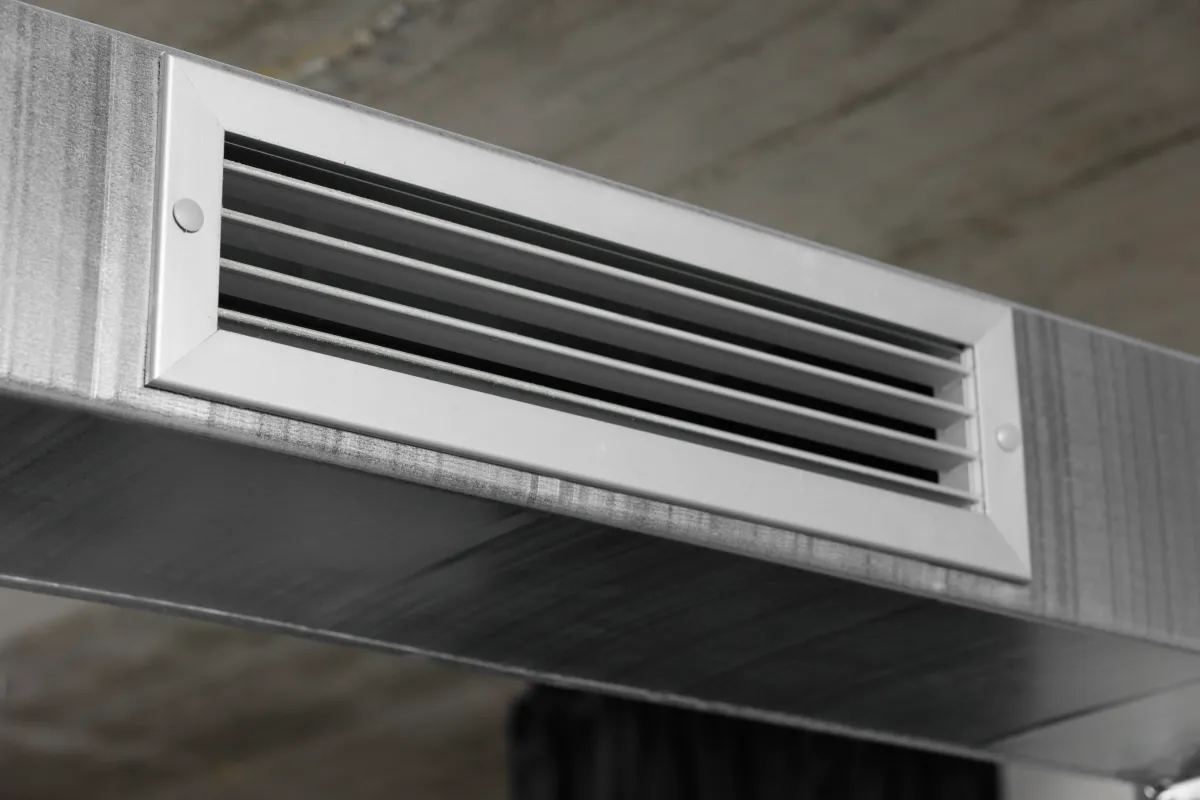
Ducted systems distribute conditioned air through a network of ducts, usually concealed within ceilings, floors or other suitable building spaces.
A central indoor unit supplies several rooms, with vents positioned throughout the property.
Ducted air conditioning can provide a more integrated appearance because much of the equipment is hidden. It can also offer centralised control across multiple rooms.
However, installation can be more involved. The property needs sufficient space for ductwork, and installation may be easier during a renovation or new-build project than in a completed home with limited access above ceilings.
What is a wall-mounted system?
A wall mounted air conditioning unit is positioned directly within the room it is intended to condition. It connects to an outdoor unit through refrigerant pipework, electrical connections and condensate arrangements.
This approach can work particularly well where one room needs dedicated cooling and heating.
Wall-mounted systems are generally visible, so appearance and positioning should be discussed during the assessment. The installer should choose a location that provides effective air distribution while fitting naturally within the room.
Which system is better for individual rooms?
For homeowners who want independent control over individual rooms, a split or wall-mounted arrangement can be particularly practical.
For example, a homeowner may want cooling in a bedroom at night but not require the entire house to be conditioned. Individual units can allow that room to be managed separately.
Multi-split arrangements can also connect several indoor units to one outdoor unit, depending on the equipment and property requirements.
The best choice depends on how many rooms require conditioning and how independently you want to control them.
Is ducted air conditioning better for larger homes?
Not automatically. Ducted systems can be useful for larger properties or homes where several rooms need coordinated heating and cooling, but the building needs to accommodate the ductwork.
A larger home does not necessarily require a ducted system. Multiple split systems may provide more flexible room-by-room control in some properties.
The layout matters more than the floor area alone.
Before choosing a configuration, consider:
- Number of rooms
- Ceiling voids
- Existing building structure
- Desired level of control
- Visual preferences
- Installation access
- Future renovation plans
A property assessment can establish which approach is realistically achievable.


What type of property do you have?

Semi-Detached

Detached

Terraced

Bungalow

Flat

Commercial or Small Office
It just takes 60 seconds
And then you can book a free consultation
How does installation affect the choice?
Installation requirements can be just as important as the system’s cooling performance.
A split system generally needs a practical route between the indoor and outdoor units. Pipework and electrical connections need to be installed neatly, while condensate must be managed correctly.
Ducted systems require more extensive planning because ducts need to reach the rooms being conditioned. Access above ceilings or beneath floors can therefore have a major influence on installation complexity.
If you are deciding between different configurations, contact Stewart Temperature Solutions before choosing equipment. The team can assess the property and explain which installation approach is most practical.
How do the systems compare?
| Feature | Split system | Ducted system | Wall-mounted unit |
| Best suited to | Individual or selected rooms | Multiple rooms | Individual rooms |
| Visibility | Indoor units visible | Mostly concealed | Indoor unit visible |
| Room-by-room control | Usually available | Depends on zoning | Usually available |
| Ductwork | No | Yes | No |
| Installation complexity | Moderate | Usually higher | Moderate |
| Heating capability | Available on many systems | Available on many systems | Available on many systems |
| Ideal property type | Existing homes | Larger or suitable layouts | Bedrooms and living spaces |
These are general comparisons. The actual installation requirements depend on the equipment and building.
What should you look for in an installer?
The type of system you choose should be matched with an installer who understands the installation requirements.
If you are searching for an air con split system installer Kilmarnock, ask how the proposed system will be positioned, where pipework will run and how condensate will be managed.
Similarly, if you are considering a ducted system, a ducted air con installer Kilmarnock should be able to explain where ducts can be installed and how the system will be accessed for future maintenance.
An installer should not recommend a system simply because it is the most expensive or technically complex option. The configuration should make sense for the property.
Can air conditioning provide heating too?
Many modern air conditioning systems use air-to-air heat pump technology. This means the same equipment can potentially provide cooling in warmer weather and heating when temperatures fall.
An Air to Air heat pump transfers heat rather than generating it in the same way as a conventional combustion-based heating appliance.
For homeowners considering year-round use, this can make air conditioning more versatile. However, the system still needs to be correctly sized and designed for the rooms being conditioned.
Discuss heating requirements during the initial assessment rather than treating them as an optional extra after the cooling system has already been selected.
Which system looks best in a finished home?
Appearance is subjective, but the three configurations create noticeably different visual results.
Wall-mounted and split systems have visible indoor units. These can be positioned carefully to minimise their visual impact while still allowing effective air circulation.
Ducted systems can be more discreet because only the vents and controls may remain visible. However, achieving this appearance may require more invasive installation work, particularly in an existing property.
The best choice is therefore a balance between appearance, performance, access and budget.
A typical home comparison
Consider a two-storey home where the owners mainly want cooling for three bedrooms and the main living area.
A ducted system could provide centralised conditioning if suitable space exists for the ductwork. However, if access is limited, a multi-split configuration may offer a simpler alternative with individual control for each room.
The decision should also consider whether the homeowner wants heating from the system and how much building work they are prepared to accommodate.
Neither configuration is automatically better. The appropriate choice comes from matching the system to the property and priorities.
What questions should you ask before choosing?
Before committing to a particular system, ask:
- Which rooms should be conditioned?
- Do I want heating as well as cooling?
- Where can indoor units be positioned?
- Is there suitable outdoor space?
- Can ductwork be accommodated?
- How will condensate be drained?
- What electrical work is required?
- How will the system be maintained?
- Can different rooms be controlled independently?
- What installation work is included in the quotation?
These questions can help prevent choosing a system that looks suitable in theory but creates installation problems in practice.
Final Thoughts
Split, ducted and wall-mounted systems each have their place. The right choice depends on your home’s layout, the rooms you want to condition, available installation space, visual preferences and whether you want heating as well as cooling.
For homeowners comparing air con options, professional assessment is more useful than choosing a system based solely on its advertised capacity or appearance.
Stewart Temperature Solutions can help you compare suitable configurations and plan an installation around your property’s requirements. Contact the team to discuss your options and request tailored advice.
Related articles




What type of property do you have?
Semi-Detached
Detached
Terrace
Bungalow
Flat
Commercial or Small Office
At a glance
Split, ducted and wall-mounted systems can all be suitable in the right circumstances, but they work differently. The best option depends on the property layout, number of rooms, available space and whether you want heating as well as cooling.
For homeowners comparing air conditioning options, understanding these differences before requesting a quotation can make the decision much easier.
If you are unsure which configuration would suit your property, Stewart Temperature Solutions can assess your home and explain the practical advantages and limitations of each approach.
What is a split air conditioning system?
A split system consists of an indoor unit connected to an outdoor unit. The indoor equipment circulates conditioned air within the room, while the outdoor component handles the heat exchange process.
Split systems are often suitable when one or a small number of rooms need individual temperature control.
Potential advantages include:
- Individual room control
- Relatively straightforward installation
- Good choice for bedrooms and living areas
- Heating and cooling capability on many models
- No requirement for ductwork throughout the property
The indoor unit is commonly wall mounted, although the exact configuration depends on the equipment and property.
A split system can therefore be useful where the homeowner wants targeted control rather than conditioning the entire property at once.
What is ducted air conditioning?
Ducted systems distribute conditioned air through a network of ducts, usually concealed within ceilings, floors or other suitable building spaces.
A central indoor unit supplies several rooms, with vents positioned throughout the property.
Ducted air conditioning can provide a more integrated appearance because much of the equipment is hidden. It can also offer centralised control across multiple rooms.
However, installation can be more involved. The property needs sufficient space for ductwork, and installation may be easier during a renovation or new-build project than in a completed home with limited access above ceilings.
What is a wall-mounted system?
A wall mounted air conditioning unit is positioned directly within the room it is intended to condition. It connects to an outdoor unit through refrigerant pipework, electrical connections and condensate arrangements.
This approach can work particularly well where one room needs dedicated cooling and heating.
Wall-mounted systems are generally visible, so appearance and positioning should be discussed during the assessment. The installer should choose a location that provides effective air distribution while fitting naturally within the room.
Which system is better for individual rooms?
For homeowners who want independent control over individual rooms, a split or wall-mounted arrangement can be particularly practical.
For example, a homeowner may want cooling in a bedroom at night but not require the entire house to be conditioned. Individual units can allow that room to be managed separately.
Multi-split arrangements can also connect several indoor units to one outdoor unit, depending on the equipment and property requirements.
The best choice depends on how many rooms require conditioning and how independently you want to control them.
Is ducted air conditioning better for larger homes?
Not automatically. Ducted systems can be useful for larger properties or homes where several rooms need coordinated heating and cooling, but the building needs to accommodate the ductwork.
A larger home does not necessarily require a ducted system. Multiple split systems may provide more flexible room-by-room control in some properties.
The layout matters more than the floor area alone.
Before choosing a configuration, consider:
- Number of rooms
- Ceiling voids
- Existing building structure
- Desired level of control
- Visual preferences
- Installation access
- Future renovation plans
A property assessment can establish which approach is realistically achievable.
What type of property do you have?
Semi-Detached
Detached
Terraced
Bungalow
Flat
Commercial or Small Office
It just takes 60 seconds
And then you can book a free consultation
How does installation affect the choice?
Installation requirements can be just as important as the system’s cooling performance.
A split system generally needs a practical route between the indoor and outdoor units. Pipework and electrical connections need to be installed neatly, while condensate must be managed correctly.
Ducted systems require more extensive planning because ducts need to reach the rooms being conditioned. Access above ceilings or beneath floors can therefore have a major influence on installation complexity.
If you are deciding between different configurations, contact Stewart Temperature Solutions before choosing equipment. The team can assess the property and explain which installation approach is most practical.
How do the systems compare?
| Feature | Split system | Ducted system | Wall-mounted unit |
| Best suited to | Individual or selected rooms | Multiple rooms | Individual rooms |
| Visibility | Indoor units visible | Mostly concealed | Indoor unit visible |
| Room-by-room control | Usually available | Depends on zoning | Usually available |
| Ductwork | No | Yes | No |
| Installation complexity | Moderate | Usually higher | Moderate |
| Heating capability | Available on many systems | Available on many systems | Available on many systems |
| Ideal property type | Existing homes | Larger or suitable layouts | Bedrooms and living spaces |
These are general comparisons. The actual installation requirements depend on the equipment and building.
What should you look for in an installer?
The type of system you choose should be matched with an installer who understands the installation requirements.
If you are searching for an air con split system installer Kilmarnock, ask how the proposed system will be positioned, where pipework will run and how condensate will be managed.
Similarly, if you are considering a ducted system, a ducted air con installer Kilmarnock should be able to explain where ducts can be installed and how the system will be accessed for future maintenance.
An installer should not recommend a system simply because it is the most expensive or technically complex option. The configuration should make sense for the property.
Can air conditioning provide heating too?
Many modern air conditioning systems use air-to-air heat pump technology. This means the same equipment can potentially provide cooling in warmer weather and heating when temperatures fall.
An Air to Air heat pump transfers heat rather than generating it in the same way as a conventional combustion-based heating appliance.
For homeowners considering year-round use, this can make air conditioning more versatile. However, the system still needs to be correctly sized and designed for the rooms being conditioned.
Discuss heating requirements during the initial assessment rather than treating them as an optional extra after the cooling system has already been selected.
Which system looks best in a finished home?
Appearance is subjective, but the three configurations create noticeably different visual results.
Wall-mounted and split systems have visible indoor units. These can be positioned carefully to minimise their visual impact while still allowing effective air circulation.
Ducted systems can be more discreet because only the vents and controls may remain visible. However, achieving this appearance may require more invasive installation work, particularly in an existing property.
The best choice is therefore a balance between appearance, performance, access and budget.
A typical home comparison
Consider a two-storey home where the owners mainly want cooling for three bedrooms and the main living area.
A ducted system could provide centralised conditioning if suitable space exists for the ductwork. However, if access is limited, a multi-split configuration may offer a simpler alternative with individual control for each room.
The decision should also consider whether the homeowner wants heating from the system and how much building work they are prepared to accommodate.
Neither configuration is automatically better. The appropriate choice comes from matching the system to the property and priorities.
What questions should you ask before choosing?
Before committing to a particular system, ask:
- Which rooms should be conditioned?
- Do I want heating as well as cooling?
- Where can indoor units be positioned?
- Is there suitable outdoor space?
- Can ductwork be accommodated?
- How will condensate be drained?
- What electrical work is required?
- How will the system be maintained?
- Can different rooms be controlled independently?
- What installation work is included in the quotation?
These questions can help prevent choosing a system that looks suitable in theory but creates installation problems in practice.
Final Thoughts
Split, ducted and wall-mounted systems each have their place. The right choice depends on your home’s layout, the rooms you want to condition, available installation space, visual preferences and whether you want heating as well as cooling.
For homeowners comparing air con options, professional assessment is more useful than choosing a system based solely on its advertised capacity or appearance.
Stewart Temperature Solutions can help you compare suitable configurations and plan an installation around your property’s requirements. Contact the team to discuss your options and request tailored advice.
Related articles
What type of property do you have?
Semi-Detached
Detached
Terrace
Bungalow
Flat
Commercial or Small Office
